This account was taken down from schoolboys from Múlasýsla in 1628, down in Skálholt, and is presented here largely unchanged. It ends when the “Turks” head off east along the coast. Small rearrangements and clarifications have been made to smooth the narrative, and the spelling brought closer to modern usage, but the stylistic tone has been retained. “First they made land with two ships to the east by Hvalnes, in a lagoon, and went ashore in four boats. There was no one at home on that farm, for everyone was up at the shieling, which was in a valley or little dale not far from the sea. There they plundered everything that was livestock, both outdoors and indoors, so that there were only six hundred (remaining). They split open the man’s chests and doors and many of his lambs that they could catch, and some of them went east along the shore looking for the people. But those who went the way where the shieling was did not find it, though they passed close by; there was a small ridge between, and they turned back to their boats. And at the very moment when they wanted to shove off, the farmer came riding from the shieling, intending to find out what was going on, for he saw the ships but did not know what ships they were. And when he came near the farm, he saw these four boats being launched and a fifth (boat), which he owned, and he supposed they must be Englishmen. He called to them and asked why they were stealing from Icelandic people who had done them no harm. But when they heard this, they grew angry and wanted to turn back to land, but they could not, because a heavy surf sprang up at the shore; the sea lifted under them so that some things washed out, though not much—a small bundle of dyed cloth and a lamb. So they left there and returned to their ships, and the farmer took what washed ashore ahead of them. After that they sailed eastward on Thursday night, and on Friday morning at first light men saw two ships by Papey.
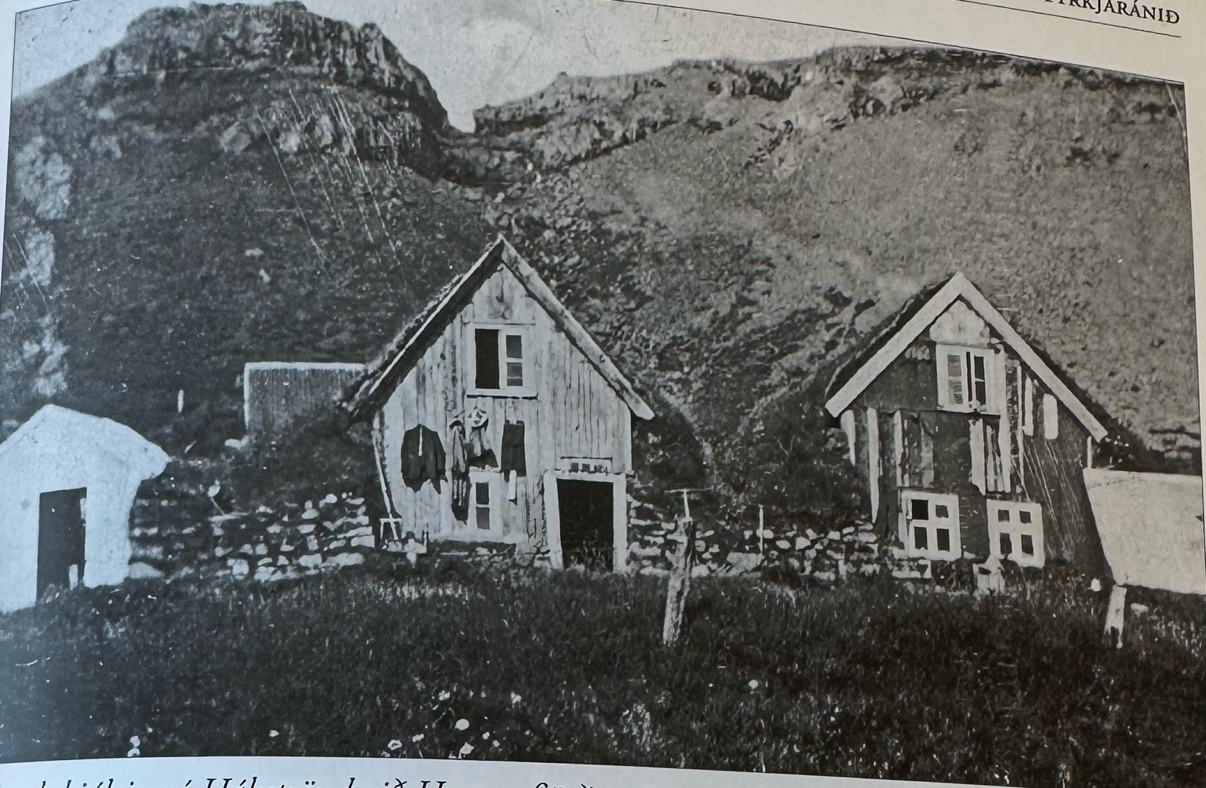
Kambshjáleiga á Hálsströnd við Hamarsfjörð. Mynd úr safni Ingimars Sveinssonar.
Then they headed into Berufjörður with a fair wind. On the way they came upon a Danish boat from Djúpivogur; there were four men aboard, lying to their longlines. They took that boat and then sailed, as Englishmen were wont to, into the fjord; when they came opposite Berunes they dropped anchor, and that was near sunrise. At the same time they went in three boats across the fjord to the trading place called Djúpivogur, which lies opposite Berunes on the south side of the fjord. One boat put directly alongside the merchant ship, but the other two went to each side of the harbor and formed a ring around the booths, and came upon the Danes unawares, while they all slept in their beds, both those on the ship and those on land. They took in all fifteen men there, including one Icelander who was with them, so that no one escaped. They bound them all and carried them in two boats to the ships. After that, thirty-five of the raiders, with weapons and shields, with shouting and din like roaring lions, went to the farm called Búlandsnes, which stands nearest Djúpivogur, and took the man who lived there, Guttormur Hallsson, with his six household members and a lad, along with three old women and a girl, as well as six paupers who had come there from other districts seeking sustenance. They also seized the couple at Búlandsnes annex-farm, and they bound the hands of the men and had two of their own drive them to Djúpivogur and put them aboard the Danish merchantman; but the other thirty-three went home to the place called under Háls. There lived the priest
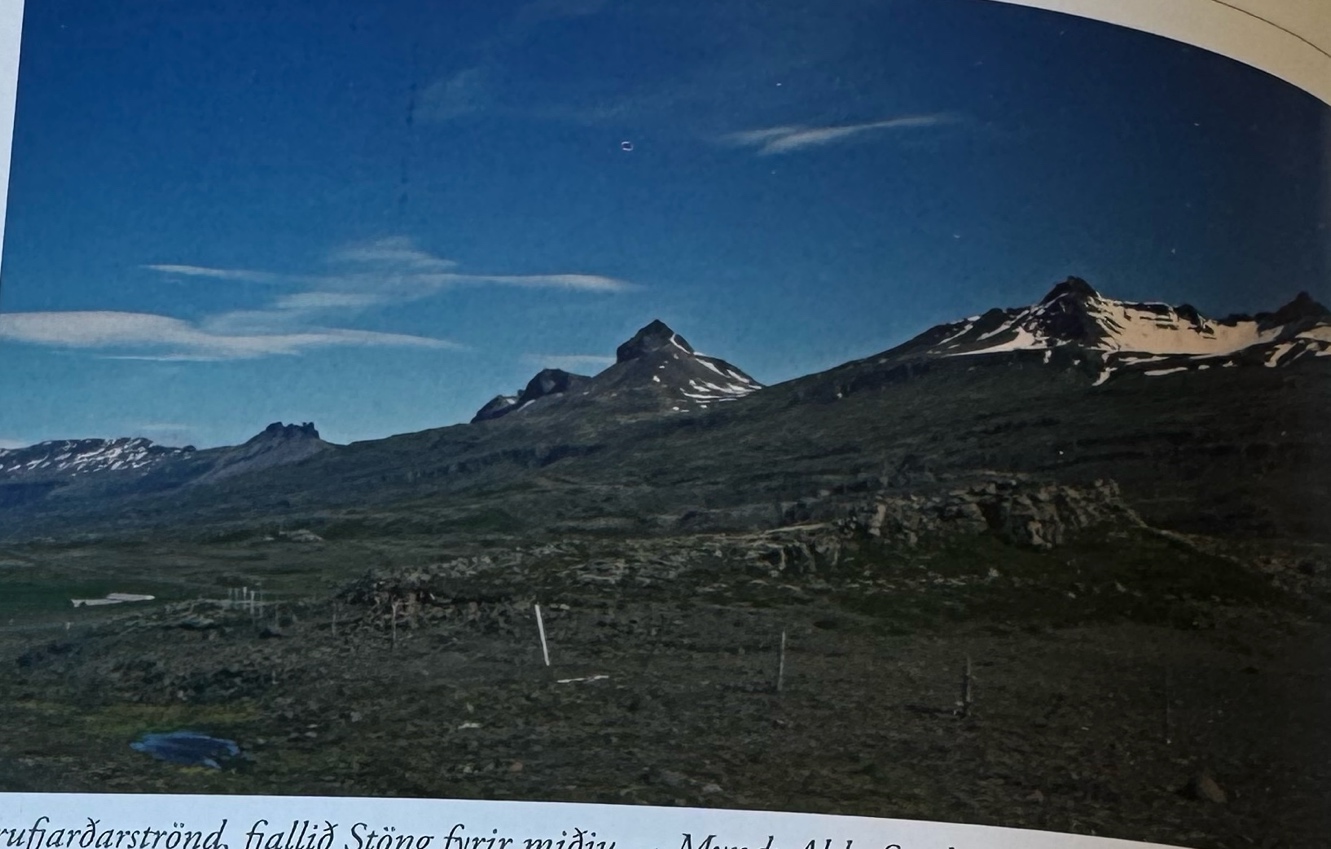
Berufjarðarströnd, fjallið Stöng fyrir miðju. Ljósmynd: Alda Snæbjörnsdóttir.
who was named Sir Jón Þorvarðsson, but they found no one at home there; so they searched until they found the shieling belonging to the place. There they found the priest and his wife, Katrín Þorláksdóttir, with their six household members, and in addition three men from the Háls annex-farm. This group they drove before them on foot along all of Berufjörður to the parish farm that stands at the head of the fjord, called Berufjörður, and by then the priest and his wife were weary and spent from the march. When the ‘Turks’ approached the shieling in Búlandsdalur, as said before, the shepherd boy Jón Ásgrímsson became aware of them and ran from them as fast as he could, in along the fjord to the farm of Berufjörður at the fjord head. There he warned the household, and they all fled from there with the shepherd over Berufjarðarskarð and into Breiðdalur. The farmer at Berufjörður, Magnús Þórðarson, was not at home at that time. He was, along with a hired man and his two grown sons, out fishing along the Berufjörður coast. They were overtaken near Steinketill, the outermost peak on the south side of Krossdalur. “Then they left the priest and his wife to wait there at Berufjörður, and those who were exhausted, but drove the others out along the Berufjörður coast to Berunes. And when boats came from the trading place with the Danes whom they had taken at Djúpivogur, they put them aboard their ships, and then went in two boats north across the fjord to Berunes. But Bjarni Jónsson the silversmith, who lived there, fled—he and all his household—and some men with him from other farms in that parish, first into a certain valley; but some thought they would be peaceable and did not wish to flee. But as soon as the raiders came ashore, they split into groups: some rushed to the farm at Berunes itself, some inland along the shore, some out along the seacoast, and some up into the mountains. Two men of Bjarni Jónsson’s people rode ahead of him and his group; both rode good horses and went to scout how matters stood. A thick fog lay halfway down the slopes. They rode back the same way they had ridden up. But when they came out of the valley, eight men came toward them, whom they took to be Icelanders because they were driving sheep ahead of them; therefore they were without fear and thought to get sure news from them. But when they came nearer, they saw the others were armed, and then each party stood facing the other and stared. And when the Icelanders suspected hostile intent, they turned back the way they had come; but it was only one raider and seven Icelandic men whom he chased, and among them were Magnús Þórðarson of Berufjörður and his sons. The raider pressed them hard, but did not catch them, for he tired before the horses. He too was armed. So the Icelanders reached their people, and then they all fled north into Breiðdalur. But the raiders who went farther inland took three men at Þiljuvellir, and in Gautavík nine men; from Skáli ten men; from Kelduskógar the husband and wife and a maid and a boy; likewise five children from Berufjörður… At Berunes they killed two old women, and at the next farm, called Karlstaðir, all the people had fled except for a vagrant lad who lay sick. Him they cut at the throat and both arms from the sides. At the cot-farm they took the man with two children and the third child with the cradle. From Kross, the farmer with two hired men; and from Gerði the couple with one child. From Krossgerði both husband and wife, and one lad from Borg; one man from Sjóarborg; the couple from Berunes; three men from Núp(ur); and from Papey two lads. All these people they carried to the ships the same day. Thereafter they sent a boat up into Berufjörður for the priest Sir Jón Þorvarðsson and his wife and the others who were still there. And when they had finished carrying the people to the ships, near midday, they began to plunder the farms on both sides of the fjord and were at it until evening. That was on Friday. But the night after, thirty-five of them went farther than they had previously gone in Háls parish, south along the road, all the way to the farm called Hamar. It stands nearly half a þingmannaleið from the trading place, Djúpivogur. The man who lived at Hamar had removed all his valuables kept indoors and hidden them, and had driven his livestock far away. But he would not have the people flee in the night; instead he set two men to keep watch and ordered them to be very alert and report at once if anything was heard of these raiders. Then the people laid themselves down to sleep for the night. But near sunrise these ungodly bloodhounds came there, and two of them broke straight into the main room where the people slept. They had long staves in their hands and struck the bed-frames and the people with loud shouting and yelling and ordered them up, scarcely allowing them to dress, and drove them into the chapel. Then they searched all the buildings with burning lights and found the two who had shirked the watch; they were lying in the kitchen room. The raiders led them out to the others and bound all the menfolk, as they were used to doing. The Icelanders were thirteen in number, but the farmer’s wife was very ill and infirm, so she could not walk away with the others. They struck her with a gun under the cheek so that she fell; then they kicked her with their feet and supposed she must be dead, and left her so, but drove all the rest to the ships. On the way they came to Háls and took the vestments and the chalice, as they had already done at the other two churches, at Berunes and Berufjörður, and they damaged the books in Háls church and hewed the altar in two and threw it down on the floor. This was on Saturday; when the people from Hamar had been brought to the ships, they again crossed the fjord to Berunes and then went north over the hills until they came into Breiðdalur. They were eight in the party and first came to the farm called Ós. There they found three men and bound them both hand and foot. These were Gísli Þórarinsson and his son, and Ásmundur Hermannsson, and they set two unarmed men to guard them while the others ran after the men across the river from Eydalir, who were to bring away certain chests of Sir Höskuldur. But when they were gone, Jón from Streiti fled with his people, for he did not know of any trouble in Breiðdalur. And when these two guards saw this group, they fled up into the mountain; and Jón of Streiti freed these men, and they fled with him up through Breiðdalur and into Hérað. The men who had gone off with the chests abandoned them and fled themselves. From those chests the raiders took nearly thirty hundreds’ worth of cloth and silver, and they split the chests apart; but they never went to Eydalir, for the place looked to them like rocks. And they searched widely in Breiðdalur for the men and did not find them, but they plundered the farms they came to and then turned back to the ships. On Sunday they went again into Breiðdalur to see whether the people would return home to the farms, and they lay in ambush here and there. But Sir Höskuldur Einarsson had set eight men to scout and find what fresh signs they could of the raiders, and they intended to ride home to Eydalir; but before they reached the place, eight raiders blocked their way, sprang up out of a hollow, and set off at once to chase them. And when they had chased them for a while, they caught one; but while they were binding him, the others rode out of sight and so escaped. On that same day a man from Hérað had come to fetch building timber with one horse, north into Breiðdalur. He rode a good horse; but when he saw the raiders where they went along the riverbanks, he loaded his pack onto the good horse he was riding and let it carry the load, and mounted the other, lazier nag. And when the raiders drew near him, he let loose the packhorse and began to urge on the lazy horse he was riding
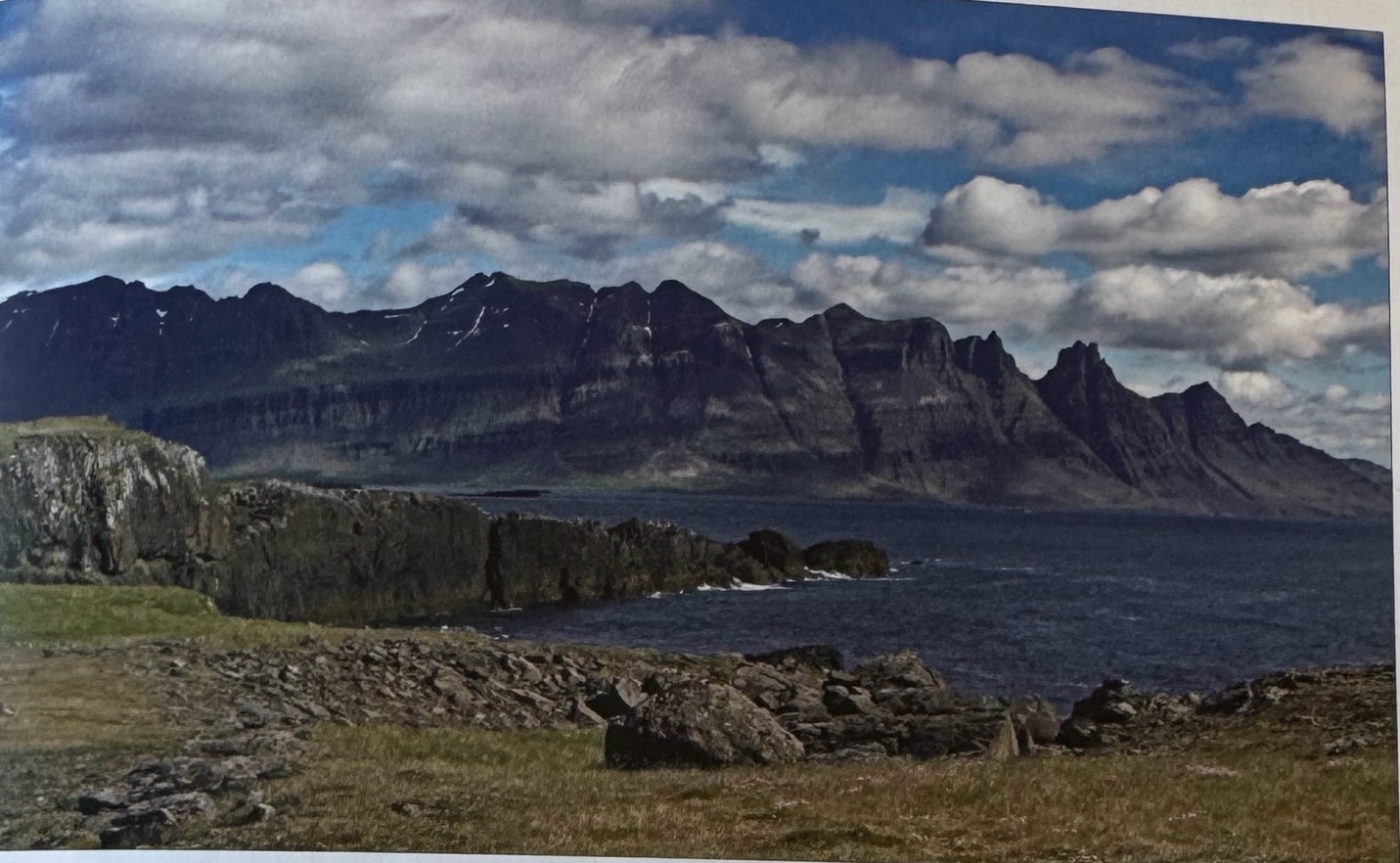
Séð frá Streitishvarfi yfir Breiðdalsvík, Súlur til hægri. Ljósmynd: Alda Snæbjörnsdóttir.
and after a little while they overtook him and seized him. That same day they travelled all the way in to Flaga in Breiðdalur, which stands almost at the innermost end of that district. The distance is one and a half þingmannaleið. But when they went back to their ships, they found an old man, nearly eighty years of age. Him they killed. They also caught a boy on the way. These three men they took out of Breiðdalur, but they struck a fourth to death. And when they came to Núp on the Berufjörður coast with these three men, they set two men to guard them there at the farm, while the others went to search for what had been hidden. Then these two guards went into the farmhouse; and while they lingered inside, one of the Icelanders ran up behind the farm—though his hands were bound behind his back. But when the raiders who were down by the shore saw him running up, they set off to chase him. And when he came up under the mountain into the fog, his trousers fell down over him, and he could do nothing but throw himself to the ground and commend himself to God. And they went round about where he lay and searched for him with great shouting and beastly noises, for they knew he was near them. Yet they did not find him and turned back to the man who had come from Hérað, and they beat him and the other man whom they had taken from sir Höskuldur’s scouts, and brought them to the ship as well, and they also plundered on the way. This they did on Sunday, but the boy got away though bound. And on Monday they went back into Berufjörður and lit two fires in the church there, and men suppose they roasted two lambs and chickens there, for the skins lay afterward in the yard
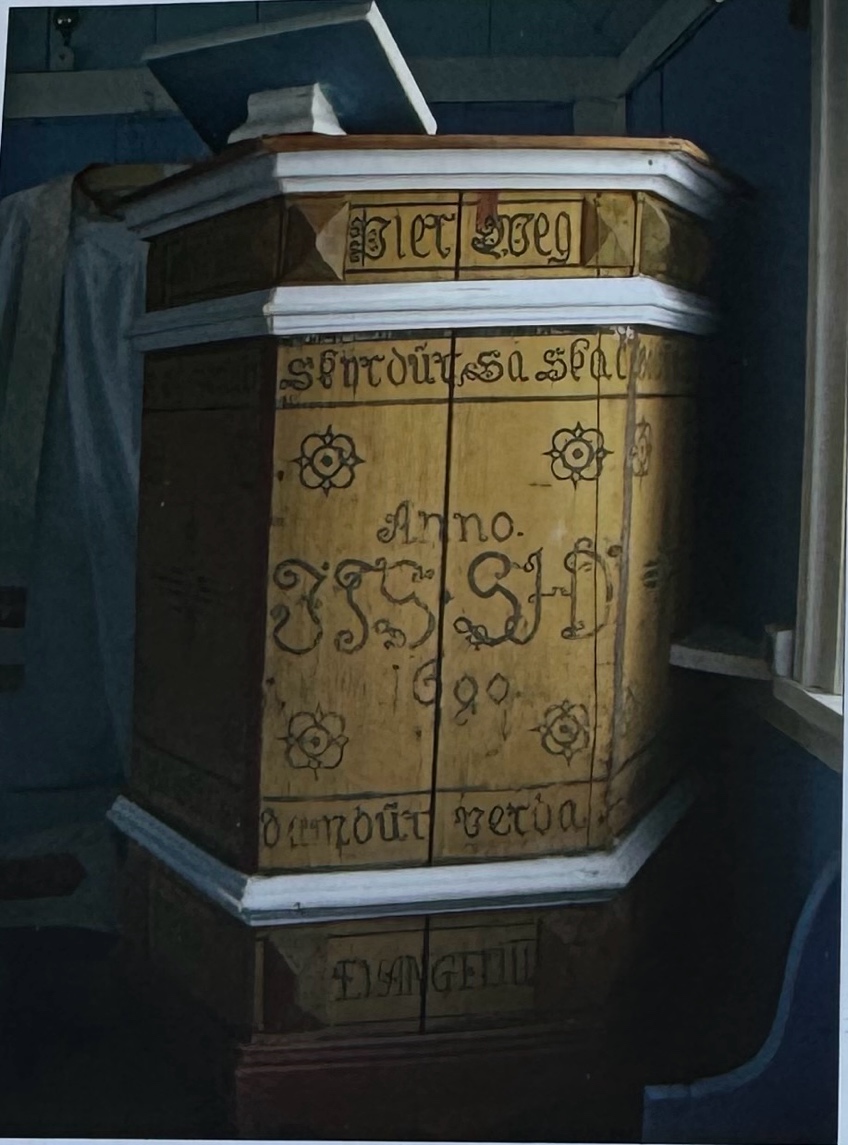
Prédikunarstóll Berufjarðarkirkju frá 1690. Ljósmynd: Alda Snæbjörnsdóttir. Stóllinn er yngri en atburðirnir 1627.
and some of the chickens were found in the other ash heap. They also chopped down the canopy that was over the altar, so it broke in two. Then they went from there out along the coast. They came to the farm called Gautavík; there they meant to burn the place, but it did not succeed, because the fire had only just been kindled when they left, so nothing burned there except the grass on the roofs and the woodpile. After that they came to Berunes and broke the partition beneath the chancel and threw the altar down onto the floor, plundering all its goods that they could seize—amounting to a hundred hundreds—together with thirteen head of cattle and eighty sheep with lambs. On that same day they seized the Danish merchantman and took from it all the goods they wanted, and then shoved the ship out to sea. But the flour and iron that had been brought ashore they did not want; instead they knocked the bottoms out of the barrels and the hoops off some of them, so that about half of what remained was spoiled; and they took the iron and the salt. This they did on Monday; and on Tuesday they intended to sail away, but they got no farther than off Kross because there was a calm. There they lay for two days. Then they got out and sailed past the northern fjords. On the way a woman named Vilborg from Gautavík died, and they ordered the Icelanders to prepare her and then cast her overboard." ( The Turkish invasion of Iceland 1627, 1906-1909:6-16). Named before : - About the handling of the robbers in the east Anno 1627.